
How to Sell a Car on eBay: A Step-by-Step Guide
Listing a car on eBay Motors reaches a national pool of buyers, not just local ones — but that reach comes with real steps to get right, from honest pricing to screening buyers before you hand over a title. Here's the full process, start to close.
Calculate Your eBay Selling Fees
Our free eBay Fee Calculator automatically calculates final value fees, promoted listing fees, international fees, regulatory fees, store subscription discounts, and different category-specific fee structures. See your estimated eBay fees, profit, and profit margin in seconds before you list.
Open Free eBay CalculatorHow to Sell a Car on eBay Motors: A Guide to Maximizing Value and Mitigating Risk
Selling a vehicle on eBay Motors differs fundamentally from selling smaller consumer goods. The platform functions as a national marketplace that connects private sellers with a vastly larger buyer pool than local classifieds, but this expanded reach introduces heightened complexity around pricing, buyer verification, payment processing, and title transfer—steps that occur almost entirely outside eBay's transactional infrastructure.
This guide provides a structured, evidence-based methodology for listing, pricing, and closing a vehicle sale on eBay Motors, grounded in market data, platform-specific mechanics, and scam prevention best practices.
Key Takeaways
- Price exclusively against sold listings, not active ones. Search eBay Motors completed sales for your exact make, model, year, and mileage band to establish a defensible market price, then cross-reference with KBB or Edmunds for validation.
- Fixed-price listings offer the most predictable outcome for standard vehicles. Auctions carry higher risk and are best reserved for vehicles with enthusiast appeal where competitive bidding is likely.
- Detail density drives buyer confidence. Include twenty or more photos, a comprehensive condition report, and clear title status disclosure. Omitting issues inevitably surfaces during independent inspections and kills deals.
- Vehicle listings carry flat fees, not percentage-based final value fees. This is a significant cost advantage compared to selling similarly priced items in other eBay categories.
- Buyer screening is critical given the national reach. Communicate through eBay's platform, verify proof of funds, and be suspicious of buyers who refuse to view the vehicle or arrange an inspection.
- Payment and title transfer happen outside eBay. Use a reputable escrow service for remote transactions, complete title transfer per your state's requirements, and cancel insurance only after the buyer takes possession.
- Seasonal timing matters. Spring and early summer typically yield the highest sale prices and fastest listings; winter tends to be slower with more buyer leverage.
1. Account Setup and Pre-Listing Preparation
Before creating a listing, ensure your eBay seller account is properly configured for vehicle transactions. The same standard eBay account used for general selling applies to eBay Motors, but vehicle listings have distinct fields, fee structures, and disclosure requirements.
Required Documentation:
- Physical vehicle title (confirm your name matches exactly)
- Vehicle Identification Number (VIN)
- Odometer reading (must match title records)
- Maintenance and service records, if available
- Any lien release documentation if the vehicle was previously financed
If you are a first-time seller, eBay will require identity verification before permitting vehicle listings. Complete this step in advance to avoid delays when your listing is ready to publish.
2. The Pricing Methodology: Empirical Market Data Over Asking Prices
The single most critical pricing error in vehicle listings is benchmarking against active listings rather than completed sales. Active listings represent seller aspirations—many vehicles remain unsold for months at prices the market has rejected. To determine true market value, you must analyze transactional data.
The Research Protocol:
Begin your pricing research by analyzing eBay Motors sold listings, which should constitute approximately sixty to seventy percent of your pricing decision. Search for your exact make, model, year, and mileage band, then filter to completed sales to see what buyers have actually paid. Cross-reference this against Kelley Blue Book's private party value range, which provides a baseline adjusted for condition and should account for fifteen to twenty percent of your pricing weight. Edmunds True Market Value serves as a second-party verification source, contributing another ten to fifteen percent. Finally, check local market listings on Craigslist or Facebook Marketplace for regional demand indicators, which should represent the remaining five to ten percent of your pricing analysis—these help you understand whether your vehicle commands a premium or discount in your specific geographic area compared to the national eBay data.
Adjustment Factors:
When applying these data points to your specific vehicle, adjust for condition by deducting for mechanical issues, cosmetic damage, or worn tires, while adding a premium for recently completed major maintenance such as timing belt replacement, transmission service, or new tires. Mileage comparables should fall within approximately ten thousand miles of your vehicle, with linear adjustments for deviations above or below that range. Additionally, vehicles originating from salt-belt states with rust risk may trade at a discount to comparable models from southern or western regions, so factor your location into the final price.
3. Listing Format Selection: Auction vs. Fixed Price
eBay Motors offers two primary listing formats, each with distinct risk-reward profiles. The optimal choice depends on your vehicle's desirability, your timeline, and your risk tolerance.
The fixed-price format works best for standard, common vehicles like Camrys, Accords, or F-150s with well-established comparables. It offers a predictable outcome with no risk of a below-market sale, and it allows you to screen buyers sequentially without the pressure of a ticking auction clock. The primary drawback is that your vehicle may sit longer if priced above market, and you forgo any competitive bidding upside.
The auction format with a reserve price is best suited for desirable or unique vehicles such as classic cars, low-production models, or modified builds. This format offers the potential for bidding above fixed-price expectations, and the reserve protects you against low-end outcomes. However, reserve prices can discourage some bidders, the listing fees are typically higher, and there is a real risk of no sale occurring at all.
The auction format without a reserve is appropriate only for high-demand vehicles where competition is guaranteed. This approach maximizes bidding energy and offers the fastest sale timeline, but it carries the highest risk, as the final sale price is determined by the single highest bid, regardless of market value. For the majority of private sellers moving a fairly typical used vehicle, the fixed-price format with a well-researched, defensible number is the most predictable and lowest-risk path. The auction format should be reserved for vehicles with demonstrable enthusiast appeal or when you have a strict, short timeline for liquidation.
4. Listing Composition: Detail Density and Photographic Evidence
Vehicle listings on eBay Motors are evaluated on information completeness more than almost any other category on the platform. Buyers are making a significant financial commitment, often sight-unseen, and their willingness to bid or buy is directly proportional to your listing's transparency.
Critical Listing Elements:
Declare the title status—whether clean, salvage, rebuilt, or branded—in the first sentence of your listing; never bury this information where a buyer might miss it. The odometer reading must match what appears on the title, as any discrepancy will kill a deal during the title transfer process. Create a comprehensive condition report covering mechanical issues such as check engine lights, transmission behavior, and fluid leaks; cosmetic damage including scratches, dents, paint fade, and rust; tire tread depth and age; interior wear on seats and electronics; and a full record of recent repairs and maintenance history.
Photographic Requirements:
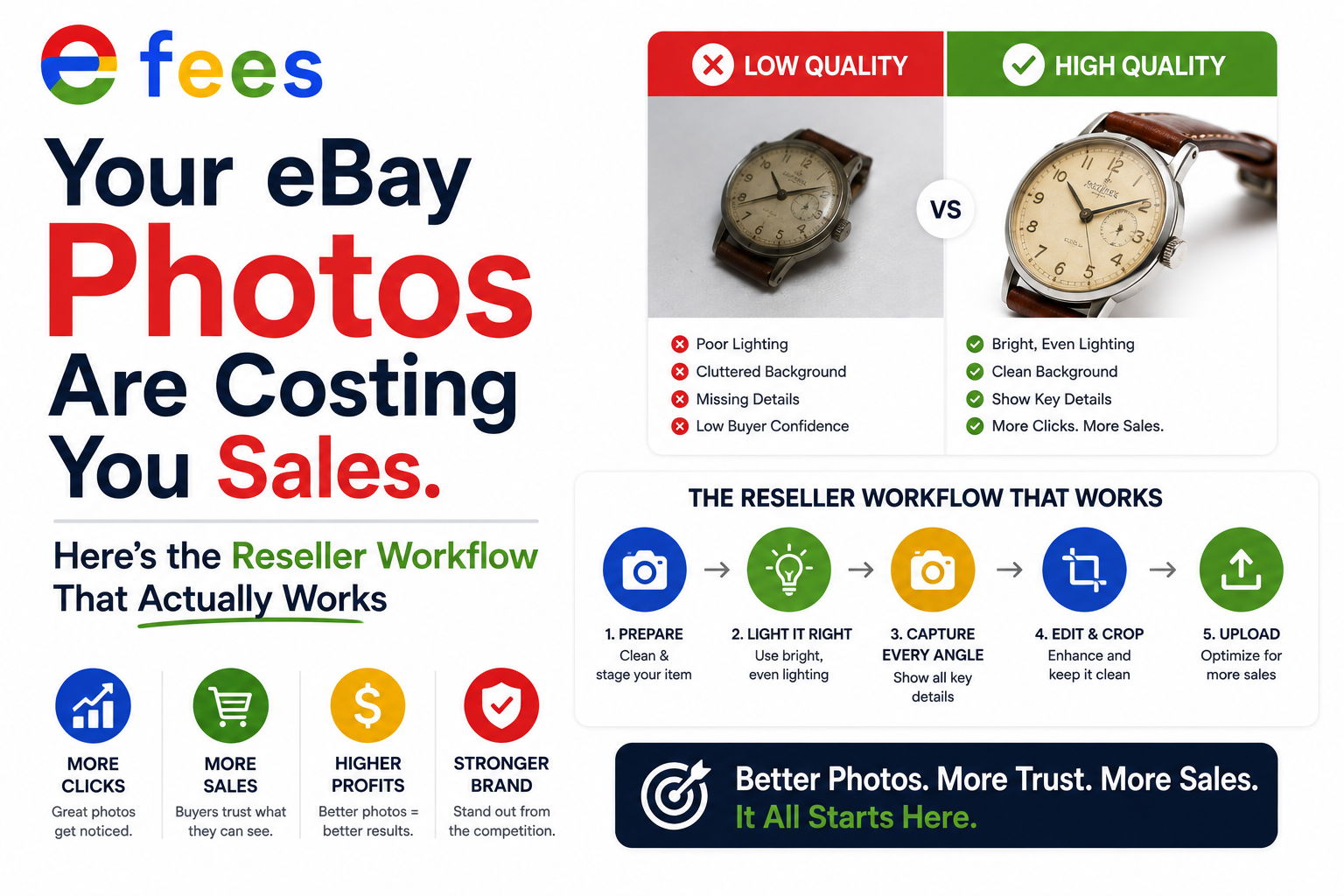
A minimum of twenty photos is recommended. Your exterior shots should cover the front, rear, both sides, and forty-five-degree angles. The interior requires clear images of the dashboard with the odometer visible, front and rear seats, the headliner, and the cargo area. Include the engine bay, the undercarriage if accessible, close-ups of any damage or wear mentioned in the listing, and tire tread depth indicators. Each photo serves as evidence supporting your condition claims and reduces the buyer's perceived risk of purchasing sight-unseen.
The Honesty Principle:
Omitting known issues to improve listing appearance is counterproductive. eBay Motors buyers frequently request independent pre-purchase inspections, and undisclosed problems inevitably surface during these inspections—typically killing the deal at the worst possible moment. Full disclosure builds trust, reduces post-sale dispute risk, and positions you as a credible seller in a marketplace where reputation matters significantly.
5. Fee Structure: Flat Listing Fees vs. Percentage-Based Models
Vehicle listings on eBay Motors are subject to a flat listing fee structure, which diverges significantly from eBay's standard percentage-based final value fee that typically runs ten to fifteen percent for most categories. For a fifteen-thousand-dollar vehicle, this represents substantial savings compared to selling a similarly priced item in other categories.
The current fee framework charges a flat listing fee at the time of listing creation, with no percentage-based final value fee applied when the vehicle sells. Optional upgrades such as featured listings or bold text incur additional charges. Before creating your listing, confirm the current flat fee rate on eBay's fee schedule page, as rates are adjusted periodically. Factor this cost into your minimum acceptable price alongside any transportation, detailing, or inspection expenses you have incurred to prepare the vehicle for sale.
6. Buyer Screening and Fraud Prevention
Because eBay Motors attracts a national audience, buyer screening is more critical than in local, in-person sales. The platform's reach increases exposure to legitimate buyers but also to sophisticated scammers who specifically target vehicle listings.
Screening Protocol:
Begin by communicating exclusively through eBay's messaging system until buyer verification is complete—this creates a documented record that eBay can review if a dispute arises. Request proof of funds showing available bank balances or a pre-approval letter from a financing institution to eliminate unqualified buyers and prevent wasted time. Be suspicious of any buyer who refuses to view the vehicle in person or arrange an independent inspection, as this is a common pattern in vehicle-sale scams involving fictitious buyers. Never accept payment via gift cards, wire transfers to unfamiliar accounts, or untraceable peer-to-peer apps, as these methods are irreversible and frequently used in fraud schemes. Finally, verify that the buyer's identity matches the name on the payment method and title transfer documents to prevent straw-purchase or identity fraud scenarios.
Red Flag Indicators:
Watch for buyers who offer to pay above asking price sight-unseen, insist on using their own shipping agent, pressure you to complete the sale without an inspection, or request refunds before taking physical possession. Any of these behaviors should prompt immediate caution and potentially termination of the transaction.
7. Buyer Financing Through eBay Motors
One structural advantage of selling on eBay Motors is the integration of buyer financing options. Eligible buyers can obtain pre-qualification through eBay's lending partners directly from the listing page, expanding your buyer pool beyond cash purchasers.
As the seller, you do not manage or facilitate the financing directly—it is an arrangement between the buyer and the lender. Your primary responsibilities are ensuring the listing description is accurate and verifiable, responding promptly to lender requests for documentation during underwriting, and providing clear title documentation when the sale is finalized. Keep in mind that financing approvals can introduce delays, so factor this into your sale timeline and confirm that buyer financing is secure before taking the vehicle off the market or making commitments to other potential buyers.
8. Closing the Sale: Payment, Title Transfer, and Delivery
eBay Motors does not process vehicle payments or title transfers. These steps occur outside the platform, directly between buyer and seller or through a dedicated vehicle escrow service.
Recommended Closing Protocol:
For remote transactions, use a reputable vehicle escrow service such as Escrow.com rather than accepting direct payment before delivery. The escrow service holds funds until the buyer confirms receipt and condition, protecting both parties. Complete the title transfer according to your state's specific requirements—some states require notarization, while others require a bill of sale in addition to the signed title, so check your state DMV website before finalizing. Provide a signed bill of sale regardless of state requirements, including buyer and seller names, the VIN, sale price, date, odometer reading, and an "as-is" disclosure if applicable. This protects both parties with a documented record of the transaction terms and date. Cancel your vehicle insurance only after the sale is fully complete and the buyer has taken physical possession. Finally, check your state's requirements for returning or surrendering license plates—do not leave them on the vehicle after the sale.
For Local Buyers: An in-person meeting to finalize payment and paperwork is generally lower-risk than a remote transaction. Conduct the meeting in a well-lit, public location with good security cameras, such as a bank parking lot or a police station designated exchange zone.
9. Market Timing and Seasonal Demand Cycles
Vehicle demand fluctuates seasonally, which can meaningfully impact sale price and listing duration. Spring, spanning March through May, represents peak demand driven by tax refunds, making it the best time to list with prices tending to be highest. Summer, from June through August, maintains strong demand for convertibles, SUVs, and family vehicles, though sports cars may dip in late summer as the season winds down. Fall, covering September through November, brings moderate demand as buyers prepare for winter, with prices generally near market levels but convertibles and motorcycles losing value. Winter, from December through February, is the slowest period as holiday expenses reduce buyer budgets, typically resulting in longer listing times and price concessions for non-essential vehicles. If you are not under time pressure, monitor sold listing trends over two to three weeks before committing to a price, as the broader used vehicle market can shift meaningfully month-over-month.
FAQ: Applied Research and Platform Mechanics
How much does it cost to list a car on eBay Motors?
Vehicle listings carry a flat listing fee rather than a percentage-based final value fee. Confirm the current flat fee structure on eBay's fee schedule page before listing, as rates are adjusted periodically.
Should I sell my car as an auction or a fixed price on eBay?
For standard, common vehicles, fixed price offers greater predictability and eliminates the risk of an auction ending below market value. Auctions are best reserved for desirable, unique, or enthusiast-oriented vehicles where competitive bidding may push the final price above a fixed listing.
How does eBay car financing work if a buyer wants to finance the purchase?
Buyers can obtain pre-qualification through eBay's lending partners directly from the vehicle listing. As the seller, you are not involved in managing the financing—your role is ensuring listing accuracy and promptly providing documentation if the lender requests it during underwriting.
Does eBay handle the payment and title transfer when I sell a car?
No—unlike smaller item sales, vehicle payment and title transfer occur outside eBay, either directly between buyer and seller or through a dedicated vehicle escrow service. Title transfer requirements vary by state, so verify your specific state's process before finalizing.
How do I avoid scams when selling a car on eBay?
Communicate through eBay's messaging system initially, request proof of funds or financing pre-approval, be wary of buyers who avoid in-person viewing or independent inspection, and never accept payment through untraceable methods like gift cards or wire transfers to unfamiliar accounts. Use a reputable escrow service for remote transactions.

eFee Editorial Team
The eFee Editorial Team publishes research-driven content to help eBay sellers better understand marketplace fees, pricing strategies, shipping costs and profitability. Our articles are regularly updated to reflect the latest eBay fee structures and seller best practices.
Reviewed periodically to reflect the latest eBay marketplace fee updates.
Was this article helpful?
Your feedback helps us improve future articles.